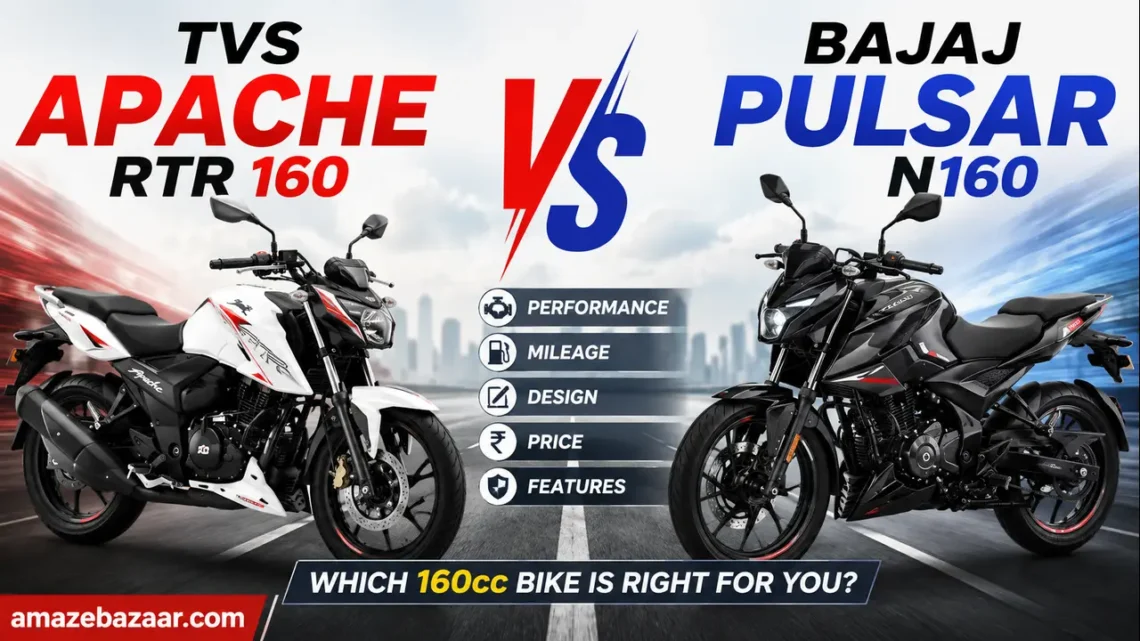
TVS Apache RTR 160 vs Bajaj Pulsar N160: Full Comparison
The 160cc naked-street segment in India is fiercely contested, and two names dominate every buyer’s shortlist: the TVS Apache RTR 160 4V and the Bajaj Pulsar N160. Both bikes promise sporty performance, sharp styling, and everyday practicality — but they take noticeably different approaches to get there.
In this comparison, we break down engine performance, mileage, features, ride quality, and pricing to help you decide which one actually suits your riding style and budget.
(Note: Prices and variant details change frequently. Please confirm the latest ex-showroom price at your nearest TVS or Bajaj dealership before purchase.)
Quick Comparison Table
| Feature | TVS Apache RTR 160 4V | Bajaj Pulsar N160 |
|---|---|---|
| Engine | 159.7cc, oil-cooled, 4-valve | 164.82cc, oil-cooled, 2-valve |
| Power | ~17.6 PS @ 9,250 rpm | ~16 PS @ 8,500 rpm |
| Torque | ~14.7 Nm @ 7,500 rpm | ~14.6 Nm @ 6,750 rpm |
| Gearbox | 5-speed | 5-speed |
| Front Suspension | USD forks (higher variants) | Telescopic forks |
| Braking | Disc-disc, single/dual-channel ABS | Disc-disc, single-channel ABS |
| Riding Modes | Sport, Urban, Rain | None on base variants |
| Connectivity | SmartXonnect Bluetooth cluster | Available on select variants |
| Claimed Mileage | ~45–50 kmpl | ~45–48 kmpl |
| Kerb Weight | ~147–149 kg | ~152 kg |
| Price Range (approx.) | ₹1.28 lakh – ₹1.35 lakh (ex-showroom) | ₹1.30 lakh (ex-showroom) |
1. Engine and Performance
The Apache RTR 160 4V uses a 159.7cc, oil-cooled, 4-valve, fuel-injected engine, tuned for a racier, revvier character with strong top-end pull — a nod to TVS’s racing heritage. It also offers three switchable ride modes (Sport, Urban, Rain), letting riders adjust throttle response to conditions, which the Pulsar N160 doesn’t offer at this price point.
The Pulsar N160 runs a 164.82cc, oil-cooled, 2-valve engine with a torquier, low-end-focused delivery. This makes it feel more relaxed and tractable in city traffic, with less need to constantly shift gears.
Verdict: Riders who want a sportier, rev-happy engine with selectable modes should lean toward the Apache RTR 160. Riders who prioritize relaxed, torquey city commuting will prefer the Pulsar N160.
2. Design and Build Quality
The Apache RTR 160 sticks to TVS’s aggressive “RTR” design language — sharp LED lighting, a muscular tank, and race-inspired graphics. Higher variants get upside-down (USD) front forks, which is a rare feature at this price and adds to both the sporty look and handling feel.
The Pulsar N160 follows Bajaj’s newer “N” streetfighter design, seen on the Pulsar N250 — a more modern, chunky, muscular stance with LED projector headlamps and a floating tail section.
Verdict: Design preference is subjective, but the Apache leans sportier/track-inspired, while the Pulsar N160 leans muscular/streetfighter.
3. Features and Technology
- TVS Apache RTR 160: SmartXonnect Bluetooth cluster (navigation, call/SMS alerts, voice assist on select variants), Glide Through Traffic (GTT) tech for smooth low-speed riding, multiple ride modes.
- Bajaj Pulsar N160: Digital instrument cluster, Bluetooth connectivity on top variants, USB charging — but fewer segment-first features compared to the Apache.
Verdict: The Apache RTR 160 currently has an edge in tech and rider-assist features.
4. Mileage and Running Costs
Both bikes are closely matched on fuel efficiency, typically claiming figures in the 45–50 kmpl range under standard test conditions. Real-world mileage will vary based on riding style, traffic, and maintenance — expect low-to-mid 40s kmpl in daily city use for both.
Insurance, spare parts, and service costs are broadly comparable, since both TVS and Bajaj have extensive dealership and service networks across India.
5. Price and Value for Money
Pricing between the two is very close, generally within a few thousand rupees of each other depending on the variant (single-channel ABS, dual-channel ABS, disc/disc combinations). Because ex-showroom prices vary by city and change periodically, always check current on-road pricing at your local dealership before deciding.
TVS Apache RTR 160 vs Pulsar N160: Who Should Buy What?
- Choose the TVS Apache RTR 160 4V if: You want sportier performance, selectable ride modes, USD forks, and richer connectivity features.
- Choose the Bajaj Pulsar N160 if: You prefer a torquier, easygoing engine for daily city commuting and Bajaj’s widespread service network.
Both are excellent 160cc motorcycles, and you genuinely can’t go wrong with either — the right choice comes down to whether you value sporty engagement (Apache) or relaxed, torquey usability (Pulsar).
Frequently Asked Questions
Q1. Which is better, TVS Apache RTR 160 or Bajaj Pulsar N160? Both are strong 160cc options. The Apache RTR 160 is sportier with more features like ride modes and USD forks, while the Pulsar N160 offers a torquier, more relaxed engine for city riding.
Q2. Which bike gives better mileage, Apache RTR 160 or Pulsar N160? Both bikes offer similar claimed mileage in the 45–50 kmpl range; real-world figures depend on riding conditions.
Q3. Which bike has a more powerful engine? The Apache RTR 160 4V has a slight edge in peak power and revs higher, while the Pulsar N160 has a slightly larger displacement with a torque-focused tune.
Q4. Does the Pulsar N160 have ride modes like the Apache RTR 160? No, the base Pulsar N160 variants do not offer switchable ride modes, while the Apache RTR 160 offers Sport, Urban, and Rain modes.
Q5. Which bike is better for daily city commuting? The Pulsar N160’s low-end torque makes it slightly easier and more relaxed for stop-and-go city traffic, though the Apache RTR 160 handles this well too with its Glide Through Traffic (GTT) feature.
Disclaimer: Specifications and prices mentioned are approximate and subject to change by the manufacturers. Please verify the latest details with your nearest TVS Motor or Bajaj Auto dealership before making a purchase decision.


You May Also Like

Royal Enfield Bullet 350 vs Classic 350: Which One Should You Actually Buy?
Royal Enfield Hunter 350 vs TVS Ronin: Which Retro-Modern Roadster Should You Buy?