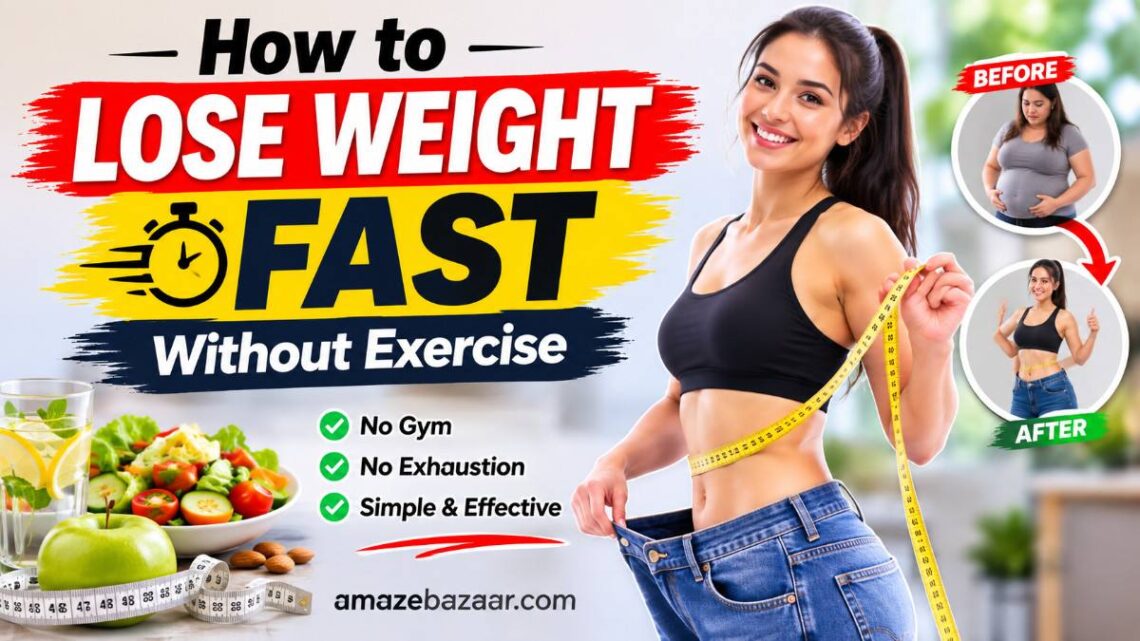
How to Lose Weight Fast Without Exercise: 11 Simple Habits That Actually Work
Let’s be honest — not everyone has the time, energy, or desire to hit the gym every day. Between work, family, and just trying to get through the week, “go exercise for an hour” can feel like the last thing on your to-do list.
The good news? You don’t need a punishing workout routine to lose weight. What you eat, how you sleep, and the small daily habits you build all play a bigger role in weight loss than most people realize. Movement helps, sure — but it’s far from the only lever you can pull.
Here’s a realistic, no-gym-required guide to losing weight by working with your body instead of against it.
1. Eat More Protein at Every Meal
Protein is the single biggest diet change you can make if exercise isn’t in the picture. It keeps you full longer, reduces cravings, and your body actually burns more calories digesting it compared to carbs or fat.
Try adding eggs, Greek yogurt, lentils, paneer, chicken, or tofu to every meal instead of treating protein as an afterthought. Even a small shift — like starting your day with eggs instead of only toast — can cut down how much you snack later.
2. Don’t Skip Meals to “Save Calories”
It sounds logical: eat less, lose more. In reality, skipping meals often backfires. You get hungrier, your blood sugar dips, and you end up overeating later in the day — usually on something less nutritious than you’d normally choose.
Eating regular, balanced meals keeps your metabolism steady and your hunger in check, which makes it much easier to stick to healthier choices without feeling deprived.
3. Drink Water Before You Reach for a Snack
Thirst is sneaky — it often masquerades as hunger. Before you grab a snack, try drinking a glass of water and waiting ten minutes. A lot of the time, that “hunger” quietly disappears.
Staying well-hydrated throughout the day also supports digestion and can naturally reduce how much you eat at meals, without any extra effort on your part.
4. Prioritize Sleep — It Matters More Than You Think
Poor sleep messes with the hormones that control hunger and fullness (ghrelin and leptin, if you want the science-y names). When you’re sleep-deprived, your body craves sugar and high-calorie foods, and it becomes harder to say no.
Aiming for 7–8 hours of consistent sleep isn’t a “nice to have” — it’s one of the most underrated weight-loss tools there is.
5. Slow Down While You Eat
It takes about 20 minutes for your brain to register that you’re full. If you’re eating quickly — at your desk, in front of the TV, scrolling your phone — you’re likely to overeat before your body even sends the “stop” signal.
Try putting your fork down between bites, or simply eating without a screen in front of you. It’s a small change, but it adds up fast.
6. Cut Back on Liquid Calories
Sodas, sweetened coffees, fruit juices, and flavored drinks can quietly add hundreds of calories to your day without making you feel any more full. Swapping even one sugary drink a day for water, black coffee, or unsweetened tea is one of the easiest wins on this list.
7. Fill Half Your Plate With Vegetables
You don’t need to count every calorie if you build your plate smartly. Vegetables are low in calories but high in volume and fiber, meaning they fill you up without weighing down your daily intake. Start meals with a salad or vegetable side, and you’ll naturally eat less of the heavier stuff.
8. Manage Stress — It’s Connected to Weight More Than You’d Expect
Chronic stress raises cortisol levels, which can increase cravings for sugary, fatty comfort foods and encourage fat storage, especially around the belly. Simple stress-reducers — a short walk outside, journaling, deep breathing, or just stepping away from your phone for a bit — can indirectly support your weight loss goals.
9. Watch Portion Sizes, Not Just Food Choices
Even healthy foods can add up if portions are oversized. Using a smaller plate, checking serving sizes on packaged food, and being mindful of “seconds” can help you eat appropriate amounts without needing to overhaul your entire diet.
10. Reduce Ultra-Processed Foods
Packaged snacks, fast food, and heavily processed meals are engineered to be easy to overeat. They’re often low in fiber and protein, meaning you feel hungry again quickly. Choosing whole, minimally processed foods most of the time — think fruits, vegetables, whole grains, and lean proteins — naturally supports weight loss without any calorie math required.
11. Move Naturally Throughout the Day
This isn’t about exercise — it’s about not sitting still for 10 hours straight. Taking the stairs, parking a little farther away, pacing while on phone calls, or doing light household chores all count as everyday movement (sometimes called NEAT — non-exercise activity thermogenesis). These small bursts of movement burn more calories over a day than most people expect.
A Quick Reality Check
“Fast” weight loss that isn’t sustainable usually isn’t worth chasing — it tends to come back just as quickly as it left. The habits above are meant to create steady, realistic progress by improving your relationship with food and daily routine, not by starving yourself or relying on extreme restriction.
If you have any underlying health conditions, or if you’re looking to lose a significant amount of weight, it’s always a good idea to check in with a doctor or a registered dietitian before making major changes. They can help you build a plan that’s safe and actually fits your life.
The Bottom Line
You don’t need a gym membership or a punishing workout schedule to lose weight. Small, consistent changes — eating more protein, sleeping better, drinking enough water, managing stress, and being mindful of portions — can add up to real, lasting results over time.
Start with just two or three of these habits this week. Once they feel natural, add another. Sustainable weight loss isn’t about doing everything perfectly overnight — it’s about doing a few things consistently, for long enough that they stop feeling like effort at all.

You May Also Like

বেশি চিন্তা বা Overthinking বন্ধ করার কার্যকর উপায়
Beginner’s Guide to Weight Loss: Where to Actually Start