Have you ever met someone whose English wasn’t perfect, yet everyone listened to them with attention?
Now think about another person who spoke fluent English but still seemed nervous, unsure, or unconvincing.
What made the difference?
The answer is simple—body language.
Your words are important, but the way you use your face, hands, posture, and eye contact often speaks louder than your vocabulary. If you truly want to become a confident English speaker, improving your body language is just as important as learning grammar and pronunciation.
Let’s discover why this powerful combination can completely transform the way you communicate.
Why Body Language Matters When Speaking English
Communication is much more than words.
When you speak English, people don’t only hear your voice—they also notice your expressions, gestures, confidence, and energy.
Good body language helps people trust you, understand you better, and stay interested in what you’re saying.
Whether you’re attending a job interview, speaking in class, giving a presentation, or having a casual conversation, your body language can make a lasting first impression.
Confidence Begins Before You Speak
Imagine walking into a room.
One person enters with shoulders back, smiles naturally, and makes eye contact.
Another walks in looking at the floor with crossed arms and a worried face.
Who appears more confident?
Most people decide within seconds.
Your posture tells people how confident you feel even before you say your first English sentence.
Standing straight, relaxing your shoulders, and keeping your head up instantly improves your presence.
Interestingly, it also helps you feel more confident from within.
Eye Contact Builds Trust
Many English learners avoid eye contact because they are afraid of making mistakes.
Unfortunately, avoiding eye contact often makes people think you’re unsure or not interested.
Instead, try maintaining natural eye contact while speaking.
You don’t need to stare continuously.
Simply look at the listener for a few seconds, glance away naturally, and return again.
This small habit makes your communication feel genuine and confident.
Smile—The Simplest Communication Tool
A smile works in every language.
When you smile while speaking English, people feel more comfortable talking to you.
It also makes your pronunciation sound warmer and friendlier.
Whether you’re introducing yourself, answering interview questions, or meeting someone new, a genuine smile creates a positive impression.
Let Your Hands Help Your Words
Many beginners keep their hands hidden because they don’t know what to do with them.
Natural hand gestures make your speech more expressive.
For example, when explaining directions, comparing two ideas, or describing size, simple hand movements help listeners understand you faster.
Avoid excessive gestures, but don’t keep your hands completely still either.
The goal is to support your words, not distract from them.
Your Voice Is Part of Your Body Language
Speaking clearly isn’t only about pronunciation.
Your voice communicates confidence too.
Instead of speaking too quickly because you’re nervous, slow down slightly.
Pause between important ideas.
Change your tone naturally instead of speaking in one flat voice.
A calm, steady voice makes you sound more fluent even if your English is still improving.
Facial Expressions Make English Feel Natural
Imagine saying, “I’m really excited!” without any expression.
Now imagine saying the same sentence with bright eyes and a smile.
Which sounds more believable?
Your face should match your words.
Happy sentences deserve happy expressions.
Serious conversations require calm expressions.
Your emotions help listeners understand your message much faster.
Avoid These Common Body Language Mistakes
Many English learners unintentionally create barriers while speaking.
Some frequently look at their phones.
Others fold their arms tightly.
Some keep looking down or constantly touch their face because they’re nervous.
These habits reduce your confidence and make communication less effective.
Instead, stay relaxed, keep an open posture, and focus on connecting with the person in front of you.
Practice in Front of a Mirror
One of the easiest ways to improve both English and body language is mirror practice.
Stand in front of a mirror and introduce yourself.
Notice your smile.
Observe your posture.
Watch your eye contact with your own reflection.
Pay attention to your hand movements.
The more you practice, the more natural your communication becomes.
Record Yourself Speaking
Your smartphone can become your best English coach.
Record a one-minute English video every day.
Watch it carefully.
Notice your expressions, gestures, posture, and speaking speed.
Most learners are surprised by how much they improve after just a few weeks of consistent practice.
Use Body Language During Interviews
Interviewers evaluate more than your answers.
They observe your confidence.
Sit straight.
Smile politely.
Shake hands confidently if appropriate.
Maintain eye contact while answering questions.
Use calm hand gestures.
Even simple English sounds much stronger when supported by confident body language.
Improve Daily Conversations
You don’t need a classroom to practice.
Use body language while talking to friends, family members, or even while practicing English alone.
The more naturally you combine movement with speech, the more fluent you’ll appear.
Confidence grows through repetition.
Remember: Communication Is a Complete Package
Many learners spend years memorizing vocabulary but ignore body language.
The truth is that effective communication combines words, voice, expressions, posture, confidence, and personality.
When these elements work together, your English becomes memorable.
People won’t only remember what you said—they’ll remember how you made them feel.
Final Thoughts
Fluent English is not only about speaking correct sentences.
It’s about communicating with confidence.
The next time you practice English, don’t focus only on grammar.
Stand tall.
Smile.
Make eye contact.
Use natural gestures.
Speak clearly.
These simple habits can dramatically improve the way others see you—and more importantly, the way you see yourself.
Remember, great communication isn’t about speaking perfect English.
It’s about connecting with people confidently.
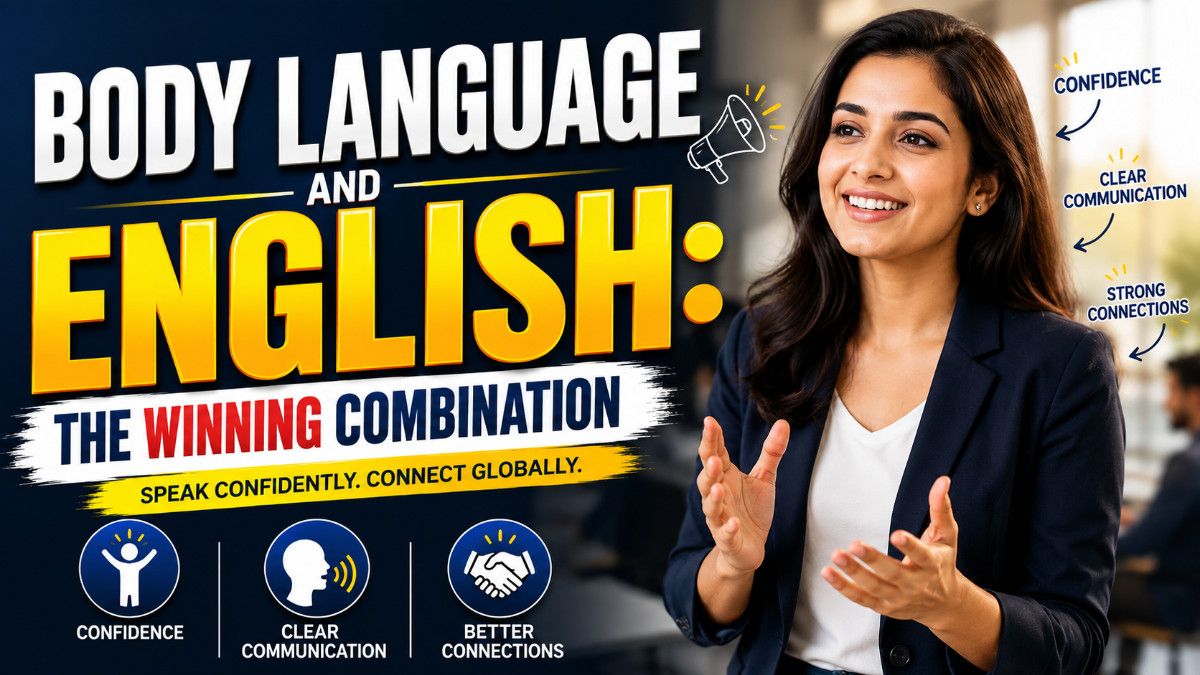
If you master both English and body language, you’ll have a winning combination that opens doors in interviews, presentations, business meetings, and everyday conversations.