When I started shopping for a scooter that could handle my daily grind without draining my wallet at the pump, the Honda PCX160 kept popping up in every forum and comment section I read. Curious (and a little skeptical of the hype), I decided to find out for myself. Here’s the honest rundown after living with it.
Quick Specs Before We Dive In
| Spec | Detail |
|---|---|
| Engine | 157cc liquid-cooled single cylinder |
| Power | ~15.8 HP |
| Torque | 15 Nm |
| Transmission | Automatic CVT |
| Fuel Tank | 8.1 liters |
| Seat Height | 764 mm |
| Weight | ~132 kg |
| Brakes | Front disc w/ ABS, rear disc |
| Lighting | Full LED |
| Fuel Economy | 95–110 MPG (roughly) |
First Look: It Doesn’t Look Like a “Budget” Scooter
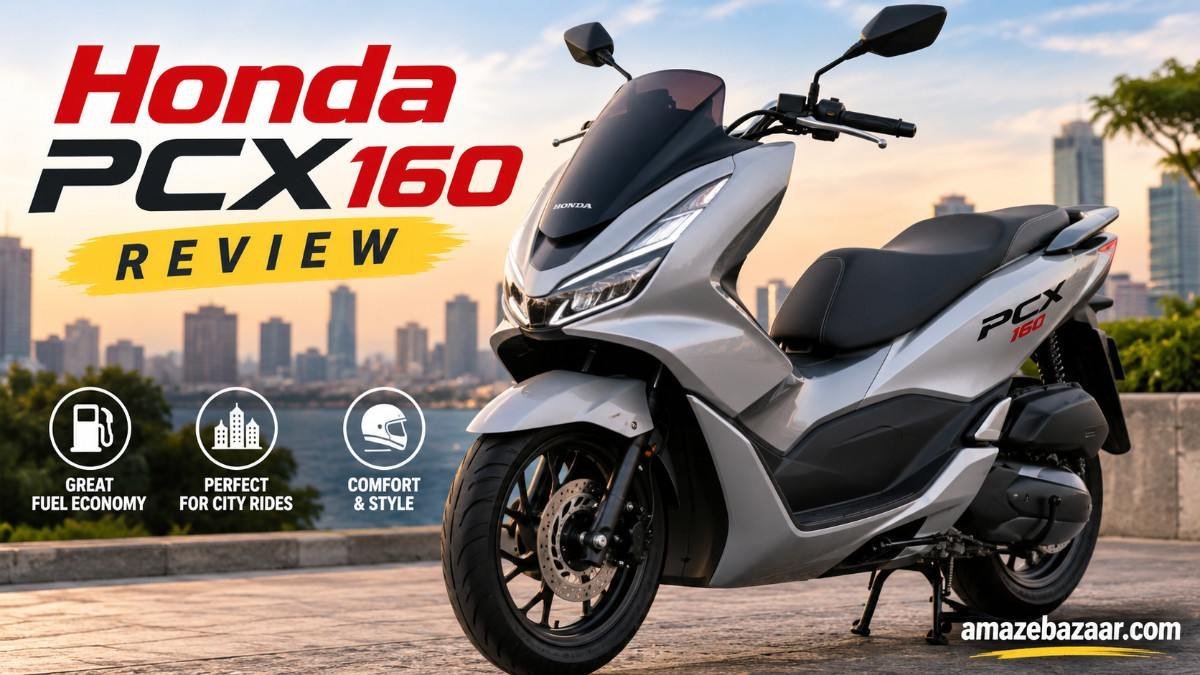
The first time I saw one parked outside a coffee shop, I honestly assumed it cost more than it does. The front fascia is sharp, the LED lighting looks like it belongs on something twice the price, and the panel gaps are tight enough that I actually checked twice for sloppy fitment (didn’t find any). It doesn’t scream “entry-level commuter” the way a lot of scooters in this class do.
What the Engine Actually Feels Like
The 157cc liquid-cooled motor is the headline feature, and for good reason. Twist the throttle and there’s none of the buzzy, strained feeling you get from smaller air-cooled scooters. Power comes on smoothly, gets you through gaps in traffic without drama, and settles into a relaxed hum once you’re cruising.
Because it’s a CVT automatic, there’s no clutch lever, no gear changes, nothing to think about besides throttle and brakes. If you’re new to two wheels, or you just want one less thing to manage during rush hour, this is about as low-stress as riding gets.
Comfort Is the Real Selling Point
I didn’t expect comfort to be the thing I’d talk about most, but here we are. The seat has enough padding and width that even a 45-minute ride doesn’t leave me shifting around looking for a better position. My knees and feet have plenty of room on the footboard, and the suspension does a genuinely good job soaking up potholes and uneven pavement — better than I expected from a scooter in this price range.
If your commute is longer than a quick five-minute hop, this is where the PCX160 separates itself from cheaper alternatives.
Fuel Economy: The Number That Sold Me
I’m not going to pretend fuel costs weren’t a big part of my decision. Most owners (myself included) land somewhere in the 95–110 MPG range depending on how aggressively you ride and what the roads look like. Paired with the 8.1-liter tank, I’m going close to two weeks between fill-ups on my usual routine — which has made a noticeable dent in my monthly gas spend.
Storage That Actually Holds Real Stuff
This one caught me off guard. The under-seat storage swallowed my full-face helmet with room left over for a light jacket and a small grocery bag. There’s also a front glove-box-style pocket that’s perfect for a phone, wallet, or keys — small conveniences that make a real difference when you’re using the scooter for errands, not just commuting.
The Features That Justify the Price Tag
- Full LED lighting front to back
- Smart Key (no fumbling for a physical key)
- ABS on the front brake
- Digital LCD dash
- USB charging (availability varies by market)
- Idling Stop System for fuel savings at lights
- Genuinely spacious under-seat storage
- A passenger seat that doesn’t feel like an afterthought
None of these feel like gimmicks bolted on to justify a higher sticker price — they’re the kind of features you actually use every day.
How It Handles City Traffic
This is where the PCX160 feels most in its element. It’s light enough to filter through slow traffic, easy to flick into a tight parking spot, and the automatic transmission means constant stop-and-go never gets tiring. If your riding is 90% city streets, this scooter was built for exactly that.
Can It Handle the Highway?
It’s not designed as a highway machine, but I’ve taken it on stretches of faster road without feeling out of my depth. The engine has enough in reserve for confident cruising at moderate highway speeds, and the windshield cuts down wind blast more than I expected. Just don’t expect it to feel at home on long, high-speed touring runs — that’s not its job.
Ride Quality and Braking
Steering is light without ever feeling twitchy or nervous, and the front ABS brake gives real confidence when you need to stop quickly. Cornering feels planted rather than vague, which matters a lot for newer riders still building confidence.
Keeping It Running
Honda’s reputation for reliability is well-earned here. Servicing costs are reasonable, parts are easy to find almost anywhere, and basic maintenance like oil changes and brake checks is straightforward. Stick to the service schedule and there’s no reason this scooter shouldn’t run well for years.
The Trade-Offs (Because Nothing’s Perfect)
- Costs more upfront than basic commuter scooters
- Rear suspension gets a bit firm with a passenger on rough roads
- Windshield adjustability is limited
- Not built for serious long-distance touring
Who Is This Scooter Actually For?
Based on my time with it, I’d point the PCX160 toward:
- Daily commuters who want comfort over raw speed
- Students and office workers navigating city traffic
- New riders who want something forgiving to learn on
- Anyone upgrading from a smaller, less refined scooter
- Riders who care about fuel costs as much as ride quality
PCX160 vs. ADV160: Which One?
People cross-shop these two constantly, so here’s the short version: the PCX160 leans into comfort, refinement, and efficiency on paved roads. The ADV160 trades some of that polish for longer suspension travel and a more rugged, adventure-styled setup. If your riding stays mostly on smooth city and highway pavement, I’d lean PCX160 every time.
So, Is It Worth Buying?
After putting real miles on it, my answer is yes. The Honda PCX160 isn’t the cheapest option out there, but the combination of comfort, fuel savings, reliability, and genuinely useful features makes a strong case for the extra cost. It doesn’t try to be everything to everyone — it just does daily riding really, really well.
If you’re commuting through city streets, running errands, or just want a scooter that feels a step above the basics without stepping into “expensive toy” territory, the PCX160 earns its spot on the shortlist.