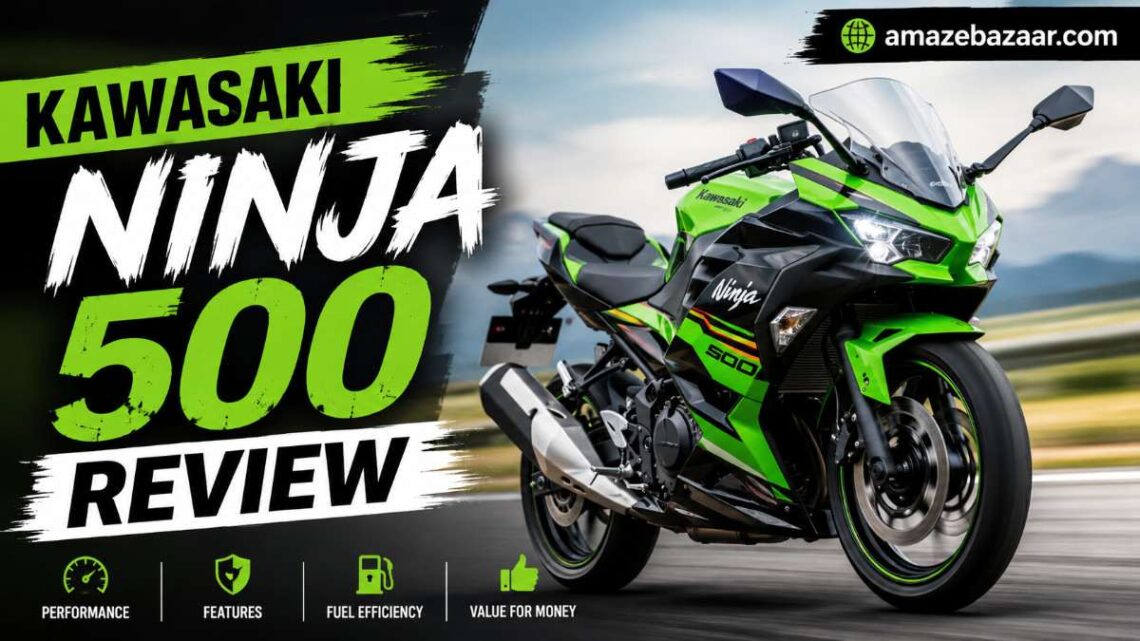
Kawasaki Ninja 500 Review: Is It Still the Best Beginner Sportbike in 2026?
If you’ve spent any time researching entry-level sportbikes, you’ve probably run into the same name over and over: the Kawasaki Ninja 500. It’s become something of a default recommendation for new riders, and for good reason. It’s light, approachable, and doesn’t punish your wallet the way a lot of “starter” bikes quietly do once you add up insurance, maintenance, and fuel costs.
But is it actually the right bike for you? In this review, we’ll break down the Ninja 500’s engine, handling, comfort, technology, pricing, and how it stacks up against its closest rivals — so you can decide whether it deserves a spot in your garage.
A Quick History Lesson
The Ninja 500 name isn’t new. Riders who’ve been around motorcycles for a while will remember the old Ninja 500R (EX500), a bike that quietly became one of the most beloved beginner motorcycles of the 1990s and 2000s. It had a reputation for being nearly unkillable, cheap to maintain, and forgiving enough that thousands of riders took their very first laps on public roads aboard one.
Kawasaki brought the Ninja 500 badge back in a completely modernized form, built around a new 451cc parallel-twin engine shared with the Eliminator cruiser. The idea was the same as it always was: give new riders something capable, comfortable, and confidence-inspiring without overwhelming them.
Engine and Performance
At the heart of the Ninja 500 sits a liquid-cooled, 451cc parallel-twin engine with double overhead cams and eight valves. Depending on which market and testing source you look at, output lands somewhere in the mid-40s to low-50s horsepower range, paired with roughly 30 lb-ft (around 42 Nm) of torque arriving low in the rev range, at around 6,000 rpm.
Numbers on paper only tell part of the story, though. What actually matters for a new rider is how that power shows up, and this is where the Ninja 500 shines. Instead of a peaky, intimidating powerband, the engine builds speed smoothly and predictably. You’re not constantly hunting for the right gear to avoid a jerky, unpredictable surge of power. That predictability is exactly what makes it such a low-stress bike to learn on, while still having enough punch to keep experienced riders entertained on a twisty backroad.
An assist-and-slipper clutch is standard equipment, which lightens the effort needed at the lever for stop-and-go city riding and helps prevent rear-wheel hop during aggressive downshifts. It’s a small feature, but it’s the kind of thing that makes daily commuting noticeably less tiring.
Handling and Chassis
The Ninja 500 uses a lightweight trellis-style frame, and the whole package tips the scales at a manageable curb weight — commonly cited in the neighborhood of 170 kg (roughly 375 lbs) depending on the ABS and non-ABS variants. That light weight pays dividends almost everywhere: it’s easier to flick through corners, easier to muscle around a parking lot, and far less intimidating when you’re still building confidence at low speeds.
The seat height sits at about 785 mm (30.9 inches), which is on the friendlier end for shorter riders compared to some of its rivals. Combined with a narrow midsection, most riders will be able to get both feet flat on the ground at a stop, which is a huge confidence booster for anyone new to two wheels.
Suspension is tuned toward comfort and stability rather than track-focused stiffness, which suits the bike’s intended audience. It won’t out-corner a dedicated supersport machine, but that was never the point. On real roads, with real potholes and imperfect pavement, the Ninja 500’s chassis strikes a sensible middle ground between playful and planted.
Brakes and Safety Tech
Up front, the Ninja 500 uses a single 310mm disc, and ABS is available as an option on most trims (and standard on higher-spec variants like the SE). For a bike in this price bracket, the braking performance is confidence-inspiring — strong enough to matter in an emergency stop, but not so grabby that it catches new riders off guard.
Kawasaki also includes its Rideology smartphone app, which pairs with the bike via Bluetooth to show riding logs, maintenance information, and general bike data on your phone. It’s not going to replace a full-blown TFT dash with turn-by-turn navigation, but it’s a nice touch of modern connectivity on a bike built to keep costs down.
Comfort and Everyday Usability
This is arguably where the Ninja 500 earns its reputation. A lot of sportbikes ask you to trade comfort for style, forcing your wrists and back into an aggressive forward lean that feels great for twenty minutes and miserable after an hour. The Ninja 500’s ergonomics split the difference: sporty enough to look and feel like a “real” sportbike, but relaxed enough that commuting or weekend rides don’t leave you sore.
The fuel tank capacity keeps range respectable, and fuel efficiency is a genuine strength here — real-world figures commonly land in the range of 55-65 mpg (roughly 24-27 km/l), which means fewer stops at the pump and lower running costs overall. For riders watching their budget, that efficiency adds up fast over a riding season.
Pricing: Where the Ninja 500 Really Wins
Pricing is one of the biggest reasons the Ninja 500 keeps showing up on “best beginner bike” lists. In the U.S. market, the base non-ABS model starts in the neighborhood of $5,400, with the ABS version landing a few hundred dollars higher, and the more style-focused SE ABS trim pushing toward the $6,500 mark before destination charges. Pricing varies by trim, model year, and region, so it’s always worth checking current listings with your local dealer.
That pricing matters because it undercuts several direct competitors. Compared to rivals like the Honda CBR500R or Yamaha’s small-displacement sportbike offerings, the Ninja 500 consistently gets singled out as offering some of the strongest value-for-money in the entry-level sportbike segment. When you’re a new rider trying to balance the cost of the bike itself against gear, insurance, and a motorcycle safety course, that lower entry price can make a real difference.
Who Should Buy the Ninja 500?
The Ninja 500 is best suited for:
- Brand-new riders who want a sportbike that looks the part without punishing them for being new to two wheels.
- Commuters who want something fuel-efficient, easy to filter through traffic on, and cheap to maintain.
- Riders upgrading from smaller displacement bikes (like a 300cc-class machine) who want more usable power without jumping straight to a full-size supersport.
- Budget-conscious buyers who still want modern features like ABS and app connectivity.
It’s probably not the right choice for experienced riders chasing track-day lap times, or anyone specifically shopping for a naked or adventure-style bike, since the Ninja 500’s fully-faired sportbike design and riding position are built around that classic sportbike silhouette.
Pros and Cons at a Glance
What we like:
- Smooth, forgiving power delivery that still has some punch
- Lightweight and easy to handle at low speeds
- Comfortable ergonomics for longer rides
- Strong fuel economy and low running costs
- Competitive pricing against rival beginner sportbikes
What could be better:
- Some competitors offer more standard tech (like full-color TFT displays) at similar price points
- Suspension is tuned for comfort, not aggressive canyon carving
- Kawasaki doesn’t publish an official top-speed figure, which can frustrate spec-sheet shoppers
Final Verdict
The Kawasaki Ninja 500 continues to earn its spot near the top of the “best beginner motorcycle” conversation, and it’s easy to see why. It doesn’t try to overwhelm new riders with power they can’t use, but it also doesn’t feel like a toy once you’ve built up some confidence and want to push a little harder. The combination of manageable weight, comfortable ergonomics, strong fuel economy, and genuinely competitive pricing makes it one of the smartest first bikes on the market right now.
If you’re shopping for your first sportbike — or looking for a light, efficient, low-maintenance second bike for commuting — the Ninja 500 deserves a serious look. It’s not flashy for the sake of being flashy; it’s simply a well-sorted, well-priced motorcycle that does exactly what it promises.
Prices, specifications, and available colors vary by model year, trim, and region. Always confirm current pricing and availability with your local Kawasaki dealer before making a purchase decision.


You May Also Like
Royal Enfield Hunter 350: Is This the Ultimate City Roadster for 2026?
Bajaj Pulsar NS200 vs KTM Duke 200 (2026): Which 200cc Streetfighter Should You Buy?