If you’re shopping for a lightweight, low-seat cruiser that won’t intimidate you on day one, chances are the Honda Rebel 300 has already landed on your shortlist. It’s one of the best-selling beginner motorcycles in the U.S. for a reason — approachable styling, a forgiving engine, and a price tag that doesn’t scare off new riders.
In this review, we’ll break down the Rebel 300’s specs, real-world performance, comfort, fuel economy, and how it stacks up against its closest rivals, so you can decide if it deserves a spot in your garage.
Quick Verdict
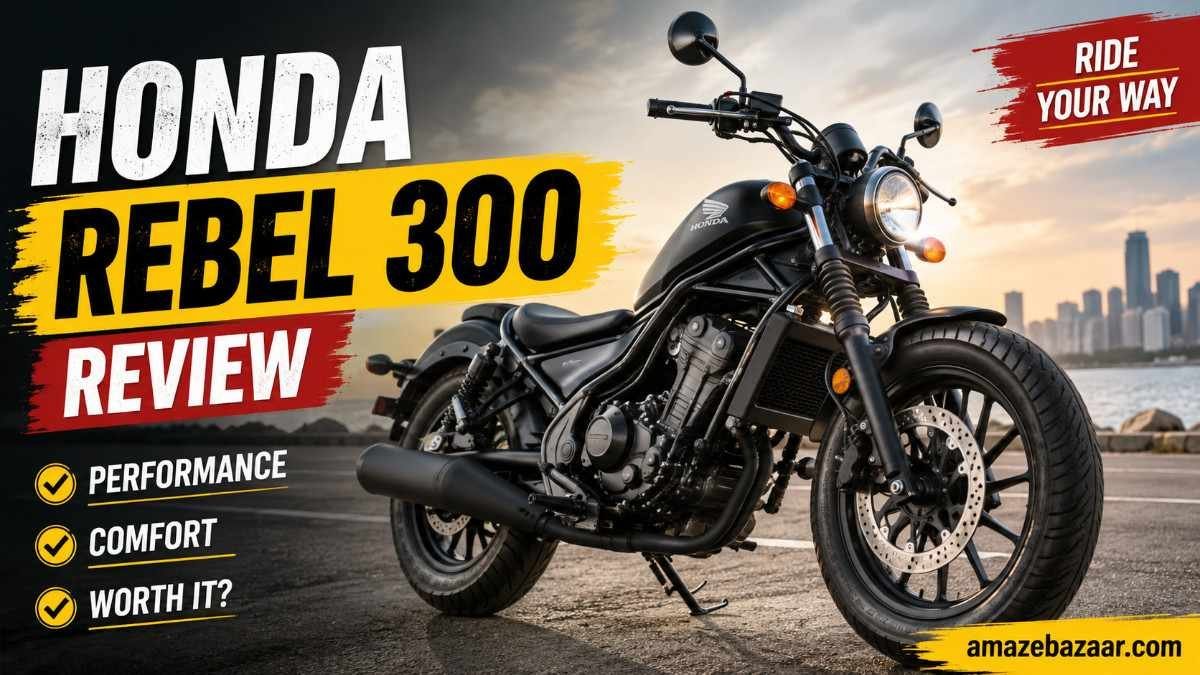
The Honda Rebel 300 is a small-displacement cruiser built around one idea: making motorcycling less intimidating. A low 27.2-inch seat height, a light curb weight, and a smooth 286cc single-cylinder engine make it one of the most confidence-inspiring first bikes on the market. It’s not fast, and highway riding two-up will feel strained, but for commuting, weekend rides, and learning the ropes, it’s hard to beat.
Honda Rebel 300 Price (2027)
Honda offers the Rebel 300 in two trims for 2026:
- Rebel 300 (base): $4,849 MSRP
- Rebel 300 E-Clutch: $5,349 MSRP (plus a $600 destination charge, bringing the total to roughly $5,949)
New for 2026, the Rebel 300 gains Honda’s E-Clutch technology — a semi-automatic clutch system that lets you shift with just the foot lever while the bike manages clutch engagement for you. You can still pull the clutch lever manually any time you want; the system simply disengages for a few seconds when you do. Outside of the E-Clutch option, the 2026 model carries over largely unchanged from previous years.
Colors for 2026 include Matte Black Metallic and Pearl Smoky Gray.
Honda Rebel 300 Specs
| Spec | Detail |
|---|---|
| Engine | 286cc liquid-cooled single-cylinder, DOHC |
| Bore x Stroke | 76mm x 63mm |
| Compression Ratio | 10.7:1 |
| Transmission | 6-speed |
| Front Suspension | 41mm fork, 4.8 in. of travel |
| Rear Suspension | Dual shocks, 5.5 in. of travel |
| Brakes | Disc front, disc rear |
| Seat Height | 27.2 inches |
| Curb Weight | 379 lb |
| Frame | Tubular steel |
The numbers tell the story: this is a physically small, light, and low motorcycle, which is exactly why it’s such a popular pick for new riders, shorter riders, and anyone who wants to build confidence without wrestling a heavy machine at a stoplight.
Riding the Rebel 300: Performance and Handling
The 286cc single won’t win any drag races, but that’s not really the point. Power delivery is smooth and predictable, which makes the Rebel 300 an excellent bike for learning throttle control and clutch work (or skipping the clutch lever entirely with the new E-Clutch trim). Around town, it has enough punch to keep up with traffic and merge confidently. On the highway, it’ll cruise at 60-65 mph, but you’ll feel it working, and passing power is limited.
Handling is where the Rebel 300 really shines for new riders. The low seat height combined with the light curb weight means most riders can flat-foot at stops, and the bike feels manageable at parking-lot speeds — a huge confidence booster if you’re still getting comfortable with a motorcycle’s weight and balance.
Comfort and Ergonomics
The riding position is relaxed and neutral, with mid-mount footpegs that won’t leave your knees aching after a short ride. The seat is comfortable enough for commuting and weekend trips, though longer highway stints can get tiring due to the wind exposure and lack of any real wind protection — there’s no fairing or windscreen on the stock bike.
The LCD instrument cluster is simple but functional, and LED lighting is standard, which is a nice touch at this price point.
Fuel Economy
One of the Rebel 300’s strongest selling points is its running cost. Riders commonly report fuel economy in the 70+ mpg range, and with a compact tank, that still translates into a solid range between fill-ups — making it a genuinely cheap bike to own and commute on.
Pros and Cons
Pros:
- Low seat height and light weight make it extremely beginner-friendly
- Affordable purchase price and low running costs
- Smooth, predictable single-cylinder power delivery
- New E-Clutch option simplifies shifting even further
- Classic cruiser styling that doesn’t look “entry-level”
Cons:
- Underpowered for sustained highway riding or two-up trips
- No windscreen or weather protection out of the box
- Suspension travel is modest, so it can feel harsh on rough roads
- Some riders will outgrow it within a year or two
Who Should Buy the Honda Rebel 300?
This bike is best suited for:
- Brand-new riders looking for a non-intimidating first motorcycle
- Shorter riders who struggle to flat-foot larger cruisers
- Commuters who want low fuel costs and easy city maneuverability
- Riders who want cruiser styling without the weight and price of a bigger V-twin
If you’re mostly riding highways, carrying a passenger regularly, or want a bike you’ll never feel the urge to upgrade from, you may want to look at the Rebel 500 or Rebel 1100 instead.
Honda Rebel 300 vs. the Competition
The Rebel 300 competes directly with bikes like the Kawasaki Eliminator and, in some markets, small-displacement cruisers from other brands. Its main advantages are Honda’s reliability reputation, resale value, and one of the lowest seat heights in its class — a big deal for new or petite riders.
Final Thoughts
The Honda Rebel 300 isn’t trying to be a highway cruiser or a powerhouse — it’s trying to make motorcycling approachable, and it succeeds. For new riders, commuters, or anyone who wants a light, low, easy-to-live-with cruiser, it remains one of the smartest buys in its class in 2026, especially now that the optional E-Clutch makes it even easier to ride.
Prices and specs reflect 2026 Honda Powersports listings and are subject to change. Check with your local Honda dealer for current pricing, availability, and financing offers.