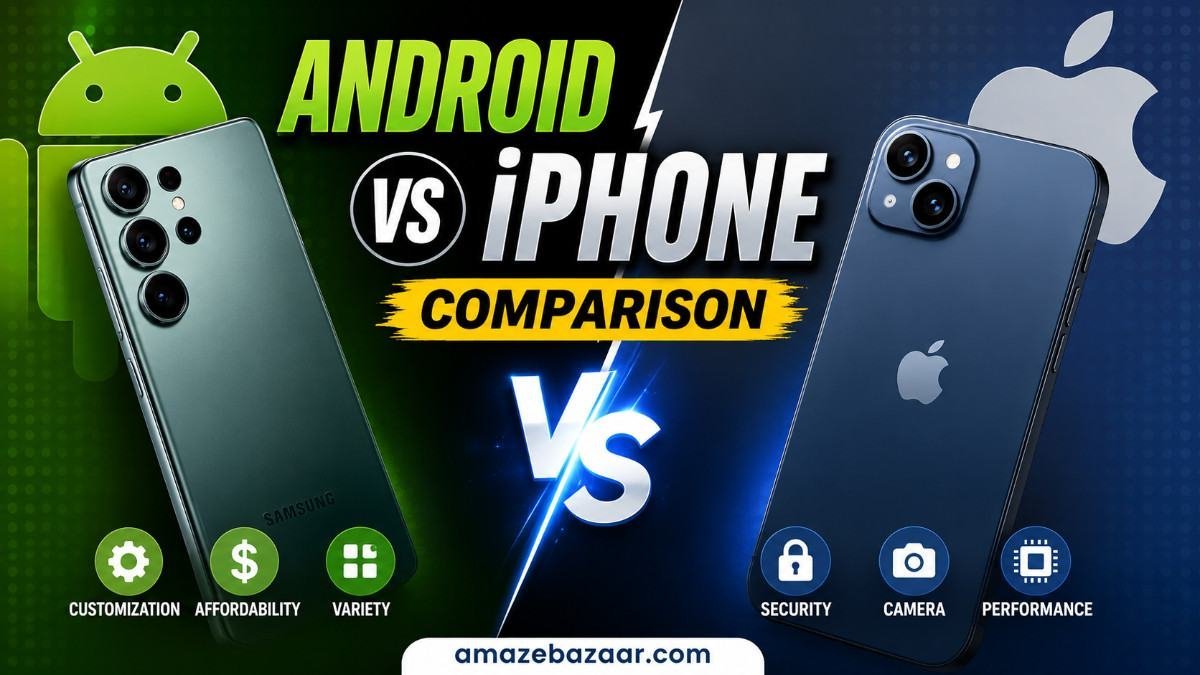
Choosing between Android and iPhone is one of the biggest decisions a smartphone buyer faces. Both platforms have matured into polished, powerful ecosystems, and the “right” choice today comes down to your budget, your habits, and which features matter most to you. This guide breaks down the real differences that affect everyday use — not just spec-sheet numbers — so you can decide with confidence.
Quick Answer
- Choose iPhone if you want a simple, consistent experience, top-tier resale value, and you’re already using Mac, iPad, or AirPods.
- Choose Android if you want more customization, a wider range of prices, and hardware variety from brands like Samsung, Google, and OnePlus.
There’s no universally “better” phone — only a better fit for how you actually use your device. Below, we compare the categories that matter most.
1. Price and Value
Android’s biggest advantage is choice. You can find capable Android phones at nearly every price point, from budget models under $200 to premium flagships that rival the iPhone. Apple, by contrast, keeps a tighter lineup, and even its “budget” iPhone models sit at a higher starting price than Android’s cheapest options.
If you want flexibility to spend less without giving up core functionality, Android has the edge. If you’d rather pay more upfront for a device that tends to hold its value longer on the resale market, iPhone usually wins there.
2. Operating System and Ease of Use
iOS is known for its simplicity. The interface stays consistent across models, updates arrive for years on nearly every device, and the learning curve is minimal — which is why iPhones are often recommended to first-time smartphone users or those who want things to “just work.”
Android takes a different approach. It offers deeper customization: you can change default apps, redesign your home screen, use widgets more freely, and tweak system-level settings that iOS keeps locked down. This flexibility is a major draw for tech-savvy users, but it can feel like more of a learning curve for people who prefer simplicity.
3. App Ecosystem
Both the App Store and Google Play offer millions of apps covering nearly every category. In practice, most mainstream apps launch on both platforms at the same time. The differences show up at the edges:
- iOS often gets new app features first, since developers frequently prioritize Apple’s ecosystem.
- Android has more flexibility for third-party app stores and sideloading apps outside of Google Play.
- Apple’s App Store review process is stricter, which some users see as a safety benefit and others see as a limitation.
4. Hardware Variety
This is where Android truly separates itself. Because dozens of manufacturers build Android phones, you can choose based on almost any priority: the best camera, the longest battery life, a foldable design, a compact size, or a rugged build for outdoor use.
Apple offers a smaller, more curated lineup — typically a handful of iPhone models per year. That means less choice, but also more consistency, since Apple controls both the hardware and software tightly.
5. Privacy and Security
Both platforms have invested heavily in privacy tools, but they take different approaches.
- iPhone emphasizes built-in privacy controls, on-device processing for many features, and tighter restrictions on what apps can access.
- Android has closed much of the gap in recent years with improved permission controls and Google Play Protect, but its more open ecosystem means security can vary more by manufacturer and how careful the user is about app sources.
If privacy is your top priority and you don’t want to manage extra settings, iPhone generally requires less effort. If you’re comfortable managing app permissions yourself, Android security has become highly capable too.
6. Ecosystem Integration
This is often the deciding factor for many buyers.
- If you already own a Mac, iPad, Apple Watch, or AirPods, an iPhone will integrate more smoothly — think seamless file handoff, unified messaging, and easy device switching.
- If you use Windows, a Chromebook, or Google services like Gmail, Docs, and Google Photos daily, Android often feels more natural and connects more directly with those tools.
Switching platforms is possible either way, but staying within one ecosystem tends to offer the smoothest day-to-day experience.
7. Customization
For users who like to personalize their device, Android is the clear winner. You can install custom launchers, change default apps for calls, browsing, and messaging, and adjust system behavior in ways iOS simply doesn’t allow.
iPhone has added more customization in recent years — lock screen widgets, app icon themes, and more — but it remains more limited by design. Apple prioritizes a consistent experience over flexibility.
Which One Should You Choose?
| If you want… | Consider |
|---|---|
| Simplicity and long-term software updates | iPhone |
| The widest range of prices and hardware options | Android |
| Deep customization and control | Android |
| Tight integration with other Apple devices | iPhone |
| Strong resale value | iPhone |
| More freedom over apps and default settings | Android |
Final Thoughts
Both Android and iPhone are excellent platforms, and the “best” phone is really the one that fits your existing habits, budget, and devices. iPhone tends to appeal to users who want a smooth, unified experience with minimal setup. Android appeals to users who want choice, customization, and flexibility across a wide range of prices.
Whichever you choose, both ecosystems continue to improve every year, so you’re unlikely to make a “wrong” decision — just one that suits your lifestyle a little differently.