
Imagine two candidates walking into the same job interview.
The first candidate speaks fluent English but struggles to maintain eye contact, lacks confidence, and finds it difficult to work with others. The second candidate is confident, respectful, and communicates well with people but cannot express ideas clearly in English.
Who has the better chance of getting hired?
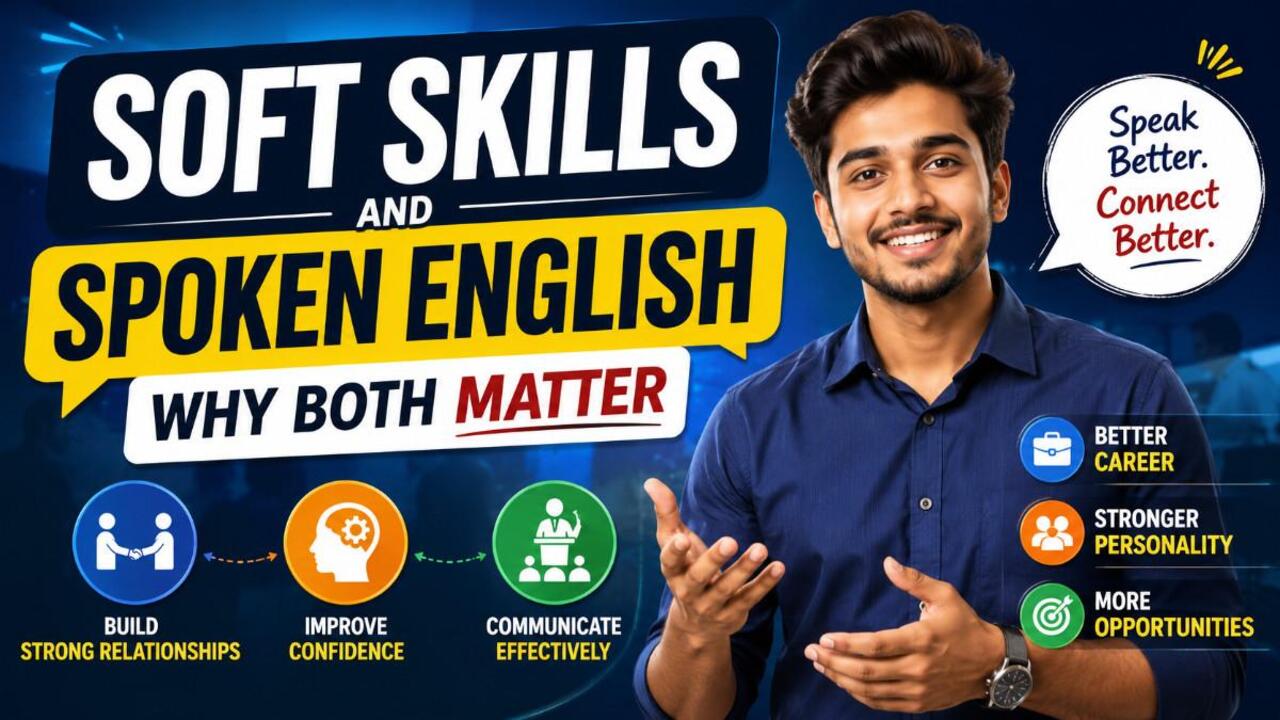
The truth is that both candidates have strengths, but neither is complete. In today’s competitive world, employers look for people who can communicate effectively and interact professionally. That’s why soft skills and spoken English are equally important.
Whether you’re a student, a job seeker, or a working professional, developing both skills can open doors to better careers, stronger relationships, and greater confidence.
What Are Soft Skills?
Soft skills are the personal qualities that influence how you interact with others. Unlike technical skills, they focus on communication, attitude, teamwork, and emotional intelligence.
Some of the most valuable soft skills include communication, confidence, leadership, teamwork, time management, adaptability, problem-solving, critical thinking, active listening, and professional etiquette.
These skills help you build trust, solve workplace challenges, and create positive relationships wherever you go.
What Is Spoken English?
Spoken English is the ability to communicate clearly and confidently in English. It includes pronunciation, vocabulary, grammar, fluency, listening, and conversation skills.
English has become the global language of business, technology, education, and international communication. Being able to speak English confidently allows you to connect with people from different backgrounds and access opportunities around the world.
Why Soft Skills Alone Are Not Enough
Many talented people have excellent leadership qualities and a positive attitude but struggle to communicate in English during interviews or workplace meetings.
Imagine knowing the correct answer in an interview but being unable to explain it clearly. Your knowledge may never be recognized because communication is the bridge between your abilities and the employer’s understanding.
Without spoken English, many opportunities can be missed.
Why Spoken English Alone Is Not Enough
On the other hand, speaking English fluently doesn’t automatically make someone successful.
A person may have excellent grammar but fail to listen, interrupt others, avoid teamwork, or become nervous under pressure.
Employers value professionals who can collaborate, solve problems, communicate respectfully, and handle workplace situations with confidence. Soft skills are what transform language ability into real professional success.
How Soft Skills and Spoken English Work Together
Think of spoken English as your voice and soft skills as your personality.
English helps you express your thoughts, while soft skills determine how people receive your message.
During interviews, spoken English helps you answer questions clearly, while confidence, body language, and active listening leave a lasting impression.
At work, English enables communication with clients and colleagues, while teamwork, empathy, and professionalism help you build strong relationships.
During presentations, spoken English helps explain your ideas, while confidence and public speaking skills keep your audience engaged.
Together, these two abilities create a powerful combination that employers value.
Benefits of Developing Both Skills
Improving spoken English and soft skills together offers countless advantages. You become more confident in interviews, communicate more effectively at work, perform better during presentations, and build stronger professional relationships.
These skills also improve leadership abilities, customer communication, networking opportunities, and overall career growth. Whether you’re applying for your first job or aiming for a promotion, both skills increase your chances of success.
Common Mistakes Learners Make
Many learners spend years memorizing grammar rules without practicing real conversations. Others focus only on vocabulary while ignoring confidence and communication skills.
Some people believe speaking fast means speaking well. In reality, speaking clearly, listening carefully, and expressing ideas confidently matter far more than speed.
Another common mistake is avoiding conversations because of fear of making mistakes. Remember, every fluent English speaker started as a beginner.
How to Improve Soft Skills and Spoken English Together
The best way to improve is through daily practice.
Read English articles aloud for fifteen to twenty minutes every day. Watch English interviews, TED Talks, and podcasts to improve pronunciation and listening skills. Speak English whenever possible, even if it’s only for a few minutes each day.
Work on your body language by maintaining eye contact, smiling naturally, and using confident posture while speaking.
Practice active listening instead of simply waiting for your turn to speak. Learn to ask thoughtful questions and respond politely during conversations.
Join group discussions, participate in mock interviews, and practice public speaking whenever you get the opportunity. Every conversation becomes a chance to improve both your English and your interpersonal skills.
Real-Life Example
Consider two graduates with similar qualifications.
One speaks English fluently but struggles to work in teams and communicate respectfully. The other speaks reasonably well, listens carefully, collaborates effectively, and presents ideas confidently.
Most employers will choose the second candidate because attitude, communication, and teamwork often outweigh perfect grammar.
This example shows why spoken English and soft skills should always be developed together.
Final Thoughts
Success in today’s world is not determined by technical knowledge alone. Employers, clients, and colleagues appreciate people who communicate clearly, collaborate effectively, and handle challenges with confidence.
Spoken English helps you express your ideas, while soft skills help people trust, respect, and remember you. Together, they create opportunities that neither skill can achieve alone.
If you’re serious about improving your career, don’t focus on only one area. Practice spoken English every day while developing confidence, communication, leadership, empathy, and teamwork. Small improvements made consistently will lead to remarkable personal and professional growth.
Start today, stay consistent, and you’ll soon notice the difference in the way you speak, interact, and succeed.





Discussion