
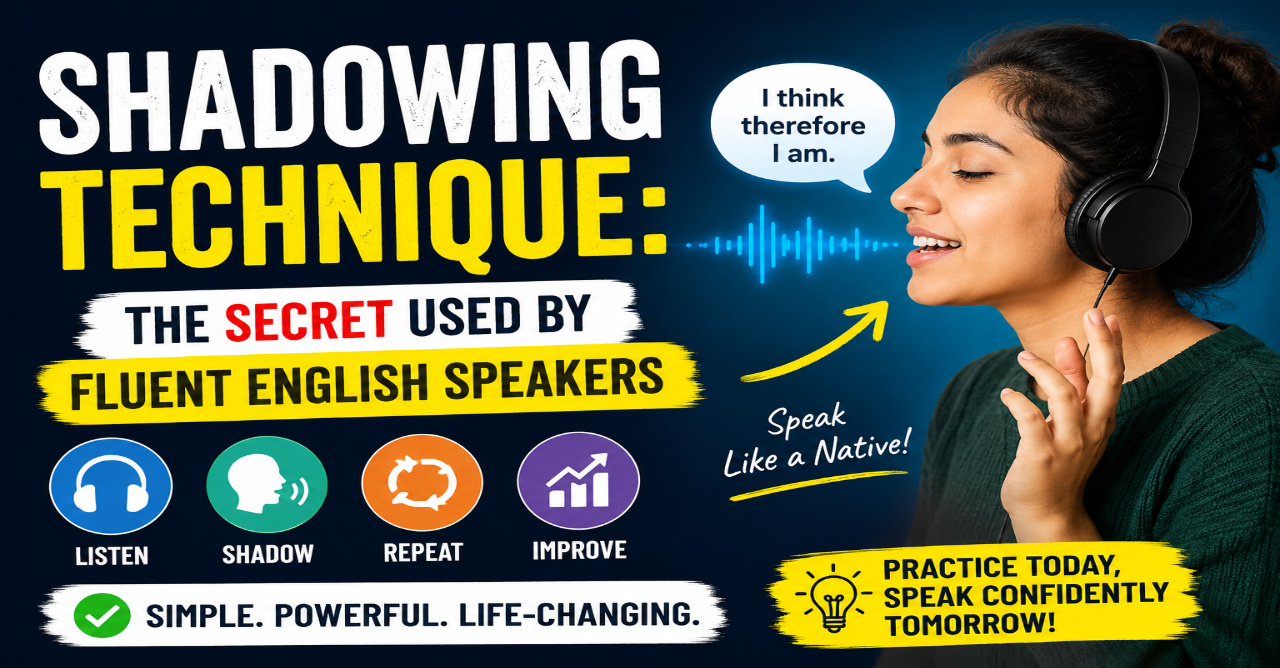
SEO Title: Shadowing Technique: The Secret Used by Fluent English Speakers
Meta Description: Discover the shadowing technique that helps thousands of English learners improve pronunciation, fluency, listening, and confidence. Learn how to practice step by step.
Focus Keyphrase: Shadowing Technique for English Speaking
Shadowing Technique: The Secret Used by Fluent English Speakers
Have you ever wondered why some people speak English so naturally, even though it’s not their first language?
Many learners spend years memorizing grammar rules and vocabulary but still struggle to speak confidently. The real difference often isn’t talent—it’s the way they practice.
One of the most effective methods used by fluent English speakers is called the Shadowing Technique. It is simple, free, and can dramatically improve your pronunciation, listening skills, fluency, and confidence.
If you’re serious about speaking English naturally, this technique deserves a place in your daily routine.
What Is the Shadowing Technique?
Shadowing is a speaking exercise where you listen to a native English speaker and repeat exactly what they say almost immediately.
Instead of pausing after every sentence, you try to speak at nearly the same time as the audio—just like a shadow follows a person.
Your goal isn’t simply to repeat the words. You also copy:
- Pronunciation
- Intonation
- Rhythm
- Stress
- Speed
- Emotion
This trains your brain to think and speak more naturally.
Why Does Shadowing Work?
Children don’t learn language by memorizing grammar books.
They learn by listening and copying.
Shadowing follows the same natural process.
When you repeatedly imitate fluent speakers, your brain begins to recognize natural speech patterns automatically.
Over time, English starts to feel more familiar instead of being something you constantly translate in your head.
Benefits of the Shadowing Technique
Improves Pronunciation
You’ll hear exactly how native speakers pronounce difficult words.
After repeating them hundreds of times, your pronunciation becomes much clearer.
Increases Speaking Confidence
Many learners know English but hesitate while speaking.
Shadowing reduces this hesitation because your mouth becomes accustomed to producing English sounds naturally.
Enhances Listening Skills
Fast English conversations become easier to understand because your brain gets used to connected speech.
Builds Fluency
Instead of thinking about every word, you begin speaking in complete phrases.
That’s how fluent speakers communicate.
Improves Vocabulary Naturally
You’ll remember words better because you’re learning them in real conversations rather than isolated lists.
How to Practice Shadowing
Step 1: Choose Easy Audio
Start with content you can understand about 80–90%.
Good options include:
- Short YouTube videos
- English podcasts
- TED Talks
- Movie clips
- News for English learners
Keep each clip between 30 seconds and 2 minutes.
Step 2: Listen Carefully
Play the audio once without speaking.
Focus on:
- Pronunciation
- Speed
- Emotion
- Sentence rhythm
Step 3: Repeat Immediately
Play the audio again.
This time, repeat every word almost simultaneously.
Don’t stop even if you make mistakes.
The goal is continuous speaking.
Step 4: Repeat Multiple Times
Practice the same clip 5–10 times.
Each repetition becomes smoother than the previous one.
Consistency matters more than quantity.
Step 5: Record Yourself
Use your phone to record your voice.
Compare your recording with the original speaker.
Notice differences in:
- Pronunciation
- Speed
- Stress
- Confidence
Small improvements every day create big results over time.
Best Resources for Shadowing Practice
Here are excellent places to start:
- BBC Learning English
- VOA Learning English
- TED Talks
- Netflix with English subtitles
- YouTube educational channels
- English podcasts for beginners
Choose topics you genuinely enjoy because you’ll stay motivated longer.
Common Mistakes to Avoid
Speaking Too Fast
Accuracy comes before speed.
Slow down until your pronunciation is clear.
Using Difficult Content
Don’t begin with complex movies or fast interviews.
Start simple.
Focusing Only on Grammar
During shadowing, imitate sounds—not grammar rules.
Grammar improves naturally through repeated exposure.
Practicing Once a Week
Shadowing works through consistency.
Even 15 minutes daily is far better than two hours once a week.
A 15-Minute Daily Shadowing Routine
2 Minutes
Listen to today’s audio.
5 Minutes
Shadow the audio repeatedly.
3 Minutes
Record yourself.
3 Minutes
Compare your recording with the original.
2 Minutes
Repeat the difficult parts.
Do this every day for one month.
You’ll notice significant improvements in pronunciation, confidence, and speaking speed.
Who Should Use the Shadowing Technique?
Shadowing is perfect for:
- Students
- Job seekers
- College learners
- Working professionals
- IELTS candidates
- Anyone preparing for English interviews
- Beginners who want to speak confidently
No expensive course is required.
Only your phone, headphones, and consistent practice.
Final Thoughts
Fluent English speakers aren’t born with special abilities.
They develop fluency through regular exposure and deliberate practice.
The Shadowing Technique is one of the fastest ways to train your ears, mouth, and brain to work together.
Don’t worry about speaking perfectly.
Focus on speaking every single day.
Just 15 minutes of shadowing daily can transform the way you speak English over the next few months.
Start today, stay consistent, and let every sentence you repeat bring you one step closer to speaking English with confidence.
Read More on amazebazaar.com/
If you enjoyed this article, don’t miss these helpful guides:
- Why Watching English Movies Alone Won’t Make You Fluent
- 25 Everyday English Phrases Every Student and Job Seeker Should Know
- 30 Daily English Sentences That Can Instantly Improve Your Speaking Confidence
- The 15-Minute Daily Routine That Can Improve Your English in Just 90 Days
Together, these guides will help you build a strong foundation for fluent and confident English speaking.